Woodworking Workshop Software UK — Production Management for British Workshops
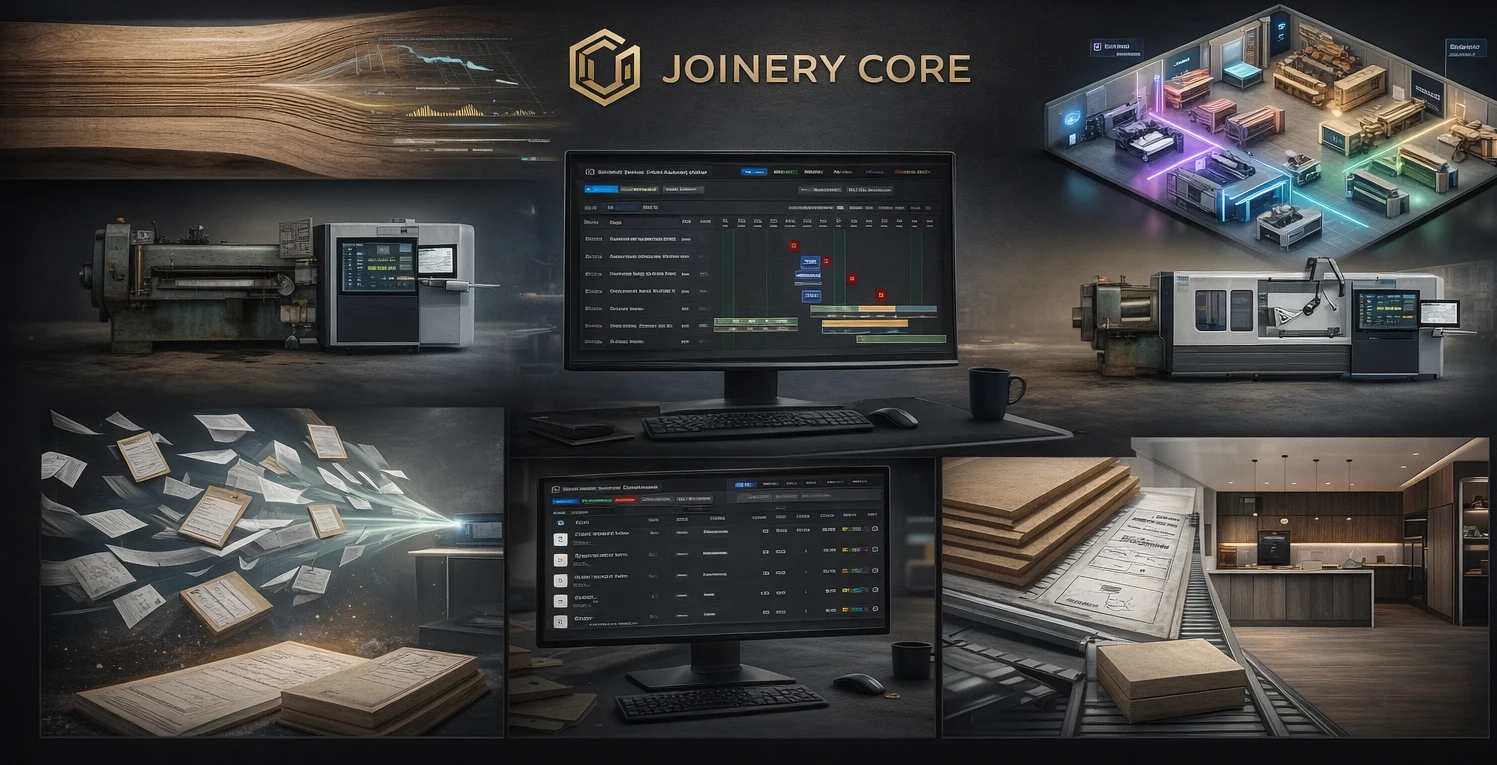
Woodworking in the UK covers a broad spectrum — from bespoke joinery and cabinet making to furniture production, timber frame manufacturing, and specialist restoration. What these businesses share is a workshop where skilled people transform raw materials into finished products through multiple stages of production. And what most of them share is a lack of software that understands this workflow.
The UK Woodworking Market
The UK has a strong and diverse woodworking industry. Thousands of workshops across the country produce everything from sash windows to fitted kitchens, from church pews to contemporary furniture. The industry is predominantly made up of small to medium businesses — typically 2 to 20 employees — working from industrial units, farm buildings, and purpose-built workshops.
What these businesses lack is software built for their scale and workflow. The market is dominated by tools designed for either much larger manufacturers (SAP, Epicor, Katana) or completely different trades (Tradify, Jobber, ServiceM8). UK woodworking workshops fall in the gap between these categories.
What UK Woodworkers Need from Software
Production Scheduling That Reflects Reality
A woodworking workshop runs multiple projects simultaneously. A fitted kitchen passes through cutting, machining, assembly, finishing, and installation. Meanwhile, a set of doors is being sprayed, a staircase is in design, and two window orders are in glazing. The workshop owner needs to see all of this on one screen — which phases are running, who is working on what, and where the bottlenecks are forming.
A Gantt chart is the natural tool for this. Each project on a row, each production phase as a coloured block on the timeline. It is how experienced workshop owners already think about their production — software just makes it visible and shareable with the team.
Stock Control in GBP
UK workshops buy materials in pounds sterling from UK suppliers. The stock system needs to work in GBP with prices that reflect your actual purchase costs. Tracking ironmongery at 4.50 per unit, timber at 12.80 per metre, and finishing products at 18.00 per litre should be straightforward — not a currency conversion exercise.
VAT handling matters too. Do your stock costs include VAT or exclude it? For most B2B purchases, costs are tracked ex-VAT. Your software should be consistent with your accounting approach.
Team Scheduling for Small Teams
A 6-person workshop does not need enterprise workforce management. It needs to know: who is working on which project today, who is on holiday next week, and whether anyone is double-booked. Simple worker allocation per production phase, with a clear view of availability, is sufficient. Anything more complex adds administration without adding value at this scale.
Job Costing Without Accounting Complexity
Workshop owners want to know: did this job make money? How much money? Was it more or less than I quoted? They do not want to reconcile bank transactions or file VAT returns within their production software. Job costing — tracking material costs, labour hours, and quoted value per project — should be simple and automatic, feeding from stock bookings and timesheets rather than requiring separate data entry.
Types of Woodworking Businesses and Their Needs
Joinery Workshops
Producing windows, doors, staircases, and architectural joinery. Multi-phase production with specific phases: timber preparation, machining, assembly, glazing, finishing, dispatch. Often working to architect specifications with defined delivery dates. Need Gantt scheduling, stock tracking, and project financials.
Cabinet Makers
Producing fitted and freestanding furniture — kitchens, bedrooms, studies, bathrooms. High proportion of sheet materials and hardware. Production flows through CNC, edging, machining, assembly, finishing, and installation. Need production scheduling, sheet goods tracking, and installation team management.
Furniture Makers
Producing bespoke individual pieces. Long production cycles with emphasis on hand finishing. Commission-based pipeline with client involvement in design. Need project tracking from commission to delivery, material sourcing per project, and detailed time tracking for accurate pricing.
Timber Frame Manufacturers
Producing structural building components. Largest scale of material consumption and longest production timelines. Engineering sign-off required before production. Site erection involves cranes and multi-day installations. Need capacity planning, material procurement tracking, and site scheduling.
Shopfitters and Fit-Out Contractors
Producing commercial interiors under tight programmes. Batch production of identical units alongside bespoke pieces. Night and weekend installations. Multiple trades coordination. Need deadline-driven scheduling, batch production management, and installation logistics.
What Not to Use
Field Service Software
Tradify, Jobber, Fergus, and ServiceM8 are designed for tradespeople who visit customer sites. They manage a dispatch-complete-invoice workflow that does not apply to workshop manufacturing. If you are producing products in a workshop, field service software is the wrong category.
Enterprise Manufacturing Software
Katana, SAP Business One, Fishbowl, and similar tools are designed for product manufacturers with standardised BOMs, high-volume production, and complex supply chains. A UK woodworking workshop with 5-15 people producing bespoke work does not need — and cannot justify the cost or setup time of — enterprise MRP.
Generic Project Management
Monday.com, Asana, and ClickUp can be configured for workshop management. But "can be configured" means spending days or weeks building custom views, columns, and automations to approximate what purpose-built software does on day one. And the result still will not include stock tracking or production-specific Gantt scheduling.
Getting Started
The best way to evaluate workshop software is to run it alongside your current system for one week. Enter your active projects, set up your phases, add your team. If it gives you better visibility by Friday than your whiteboard gave you on Monday, it is the right tool. If it creates more admin than it saves, keep looking.
Most UK woodworking workshops find that the transition takes about a day of setup and a week of parallel running. By week two, the whiteboard feels like going back to paper maps after using a satnav.
Frequently Asked Questions
Does this work with my existing accounting software?
Workshop management software runs alongside your accounting package, not instead of it. You continue using Xero or QuickBooks for VAT, payroll, and accounts. The workshop software handles production, stock, and team management. Direct integration is not essential — they serve different purposes.
How quickly can I be up and running?
Same day. Enter your current projects, set up your production phases, add your team members. The system is ready to use. You can add stock items, historical data, and additional detail over the following days.
What if my workshop makes different types of products?
Production phases are customisable per project. A window project has different phases from a kitchen project, which is different from a staircase project. You define the phases that make sense for each type of work.
Workshop software built by a UK workshop owner
Joinery Core handles production, stock, team and finances. GBP, flat-rate pricing, same-day setup. 14-day free trial.